
Disclosure: The Graduate Samaritan is a free independent blog supported by its readers; this post may contain affiliate links that may earn a tiny commission to help the blog sustain itself, thank you for supporting this independent blog! (full disclaimer here)
Moving into a second year student house is exciting — more freedom, more space, fewer rules than halls. But it can also be one of the most stressful parts of university life, especially if you’re renting privately with people you barely know.
Between complex contracts, guarantor clauses, unclear bills, and deposit disputes, it’s easy to make costly mistakes. And unfortunately, weak regulation and inconsistent landlord standards mean students often learn the hard way.
This guide walks you through everything you need to check before signing a student tenancy agreement, so you protect your money, your parents (if they’re guarantors), and your peace of mind.
📑 1. Understand Your Tenancy Agreement (This Is Critical)
One of the biggest mistakes students make when moving into private rented accommodation is not properly understanding the contract.
There are two main types:
Joint Tenancy
All tenants are equally responsible for the entire rent. If one person doesn’t pay, everyone else is liable.
Individual Tenancy
Each tenant is only responsible for their own rent and room.
👉 If you’re signing a joint tenancy, ask clearly:
- What happens if someone doesn’t pay?
- Are all tenants legally liable?
- Is the guarantor liable for the entire house or just one student?
Many parents unknowingly sign guarantor agreements that make them responsible for the full property rent — not just their child’s portion.
If possible, ask whether individual tenancy agreements are available. They provide financial protection and reduce stress within the group.
If you’re unsure about contract wording, check if your university’s Students’ Union offers a contract review service. Many do.
💰 2. Deposits, Deductions & Protecting Your Money
This is where most disputes happen.
In England and Wales, landlords must place your deposit into a government-approved protection scheme such as:
- Deposit Protection Service
- MyDeposits
- Tenancy Deposit Scheme
Nevertheless, you should receive confirmation within 30 days of payment.
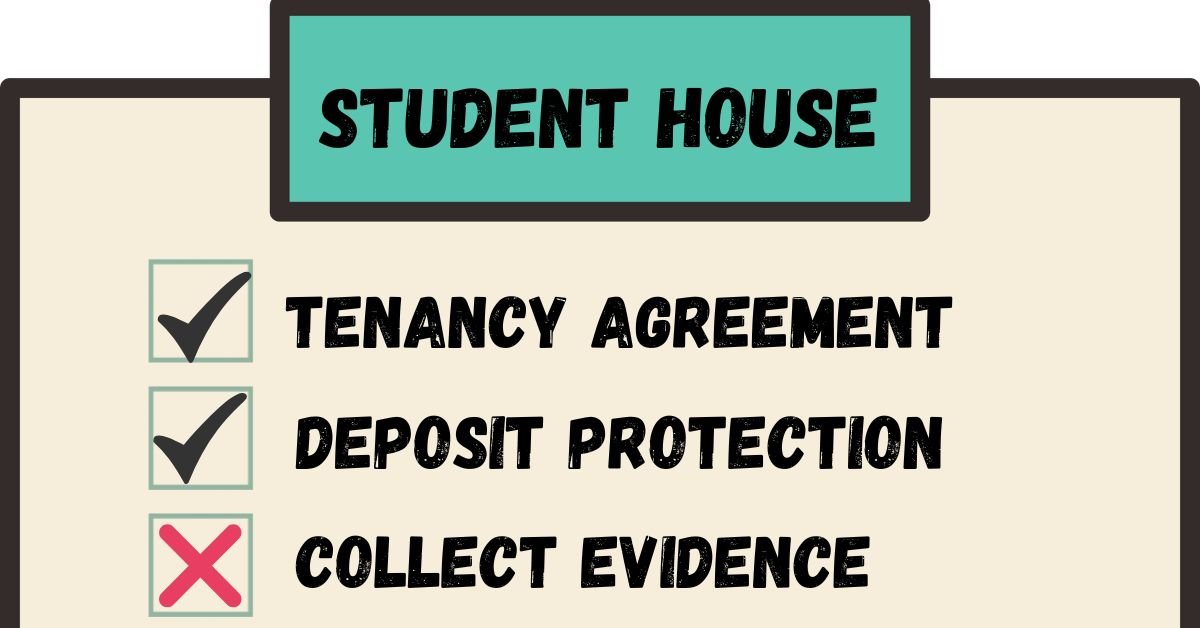
The Golden Rule: Document EVERYTHING on Day One
Take photos of:
- Every wall
- Floors
- Close-ups of damage
- Mould
- Appliances
- Inside cupboards
- Windows
- Bathroom fittings
Agents often take wide-angle “move-in” photos but use close-ups at checkout to justify deductions.
Email your evidence immediately so there’s a digital timestamp.
One real case: A group was charged nearly £500 for “dirt and mould” on move-out — despite the property being filthy when they moved in. After presenting dated photo evidence, deductions dropped to just £12 per tenant.
If you disagree with deductions, you can escalate through the official deposit scheme for an independent review.
🔍 3. What to Check During Property Viewings
Before signing, go beyond surface impressions.
Safety First
- Smoke alarms
- Carbon monoxide detector
- Secure locks
- Windows that close properly
- Boiler service certificate
- Energy Performance Certificate (EPC)
Lower EPC ratings mean higher heating bills.
Heating & Insulation
- Radiators in every bedroom?
- Storage heaters? (expensive to run)
- Double glazing?
Kitchen & Appliances
Open everything.
- Is the fridge/freezer big enough for 5–7 people?
- Missing shelves?
- Washing machine included?
- Tumble dryer?
- Oven condition?
Furniture
Does every room have:
- A desk?
- A proper chair?
- A bed in good condition?
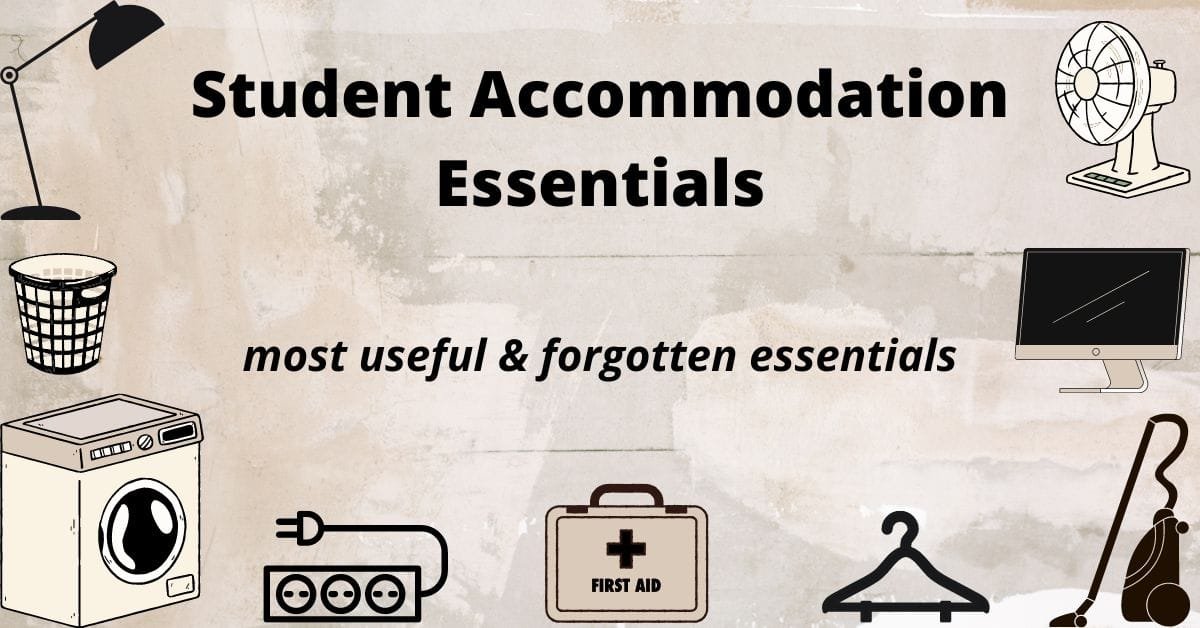
Many student houses don’t include basics like kettles, bins, lampshades or toasters — which all add up financially.
👉 Recommended: Check out our Accommodation Essentials list – don’t forget the stuff everyone forgets!
📶 4. Bills & Utilities: Read the Small Print
Ask:
- Are bills included?
- Is there a usage cap?
- Is WiFi included?
- What speed is the connection?
- Who manages payments?
Some “bills included” packages cap usage. If you exceed the allowance, you pay extra.
If managing bills yourselves, open a shared digital bank account and agree on a monthly direct debit from everyone. It builds responsibility and avoids conflict.
Also check if the property uses key meters — topping these up can be inconvenient if you’re unaware.
🚿 5. Practical Living Considerations Students Forget
When moving into a second-year student house, lifestyle matters.
- How many bathrooms per person?
- Is there enough fridge space?
- Is there a living room, or just a kitchen?
- Are you responsible for garden maintenance?
- Is there parking?
- How easy is transport to campus?
Being on a bus route is very helpful — but check peak times. Buses near university campuses often fill up quickly in the mornings.
👥 6. House Dynamics: Avoid Conflict Before It Starts
Most house stress isn’t about landlords — it’s actually about housemates.
Before moving in, discuss:
- How rent is split (equal vs room size adjusted)
- Who manages payments
- Cleaning expectations
- Guests and overnight stays
- Noise and parties
- Shared grocery systems (if any)
Some houses benefit from a weekly meal or catch-up to maintain communication.
Awkward conversations early prevent bigger problems later.
🗓️ 7. Contract Length & Summer Rent
Many second-year houses operate on 48–52 week contracts, often starting in July.
Ask:
- Are you paying for unused summer months?
- Can the property be left empty?
- Is subletting allowed?
Financial planning here is essential.
Also factor in:
- Holding deposits
- 6–8 weeks rent upfront
- Deposit amount
The upfront cost can be significant.
🧼 8. Moving Out: Professional Cleaning Clauses
If your contract requires professional cleaning at the end, the property must also have been professionally cleaned before you moved in.
If it wasn’t — challenge it.
Keep:
- Entry photos
- Inventory records
- Email correspondence
Documentation protects your deposit.
🚚 9. Moving Day Reality
Campus areas during moving season are chaotic.
Prepare for:
- Limited parking
- Busy roads
- Bus delays
- Key collection queues
If moving from halls without overlap, you may need temporary storage. Planning reduces stress significantly.
💸 Bonus Tip: Free Amazon Prime
Did you know? If you are under 22, or a full time Uni student in the UK — you are eligible for 6 months free of Amazon Prime, including next-day delivery, Prime Video, Music, and exclusive student discounts.
It’s a small perk — but many students find that it can genuinely save time and money.
👉 Check your eligibility here.
🎓 Amazon Prime Student: The Ultimate Uni Perk!
- 🚚 Free Next-Day Delivery
- 🎬 Amazon Prime Video
- 🎶 Prime Music
- 🎓 Student-Exclusive Offers
⚖️ Final Thoughts: Be Picky, Be Informed, Be Confident
Moving into a second-year student house is a major step toward independence.
Being thorough is not being difficult. It’s being responsible.
Ask questions.
Read contracts.
Take photos.
Understand liabilities.
Document everything.
Most students lose money not because they caused damage — but because they didn’t document properly or challenge unfair deductions.
You deserve safe, fair accommodation.
❓ FAQ: Moving Into a Second-Year Student House
If you have a joint tenancy, all tenants are legally liable. With individual tenancies, only that person is responsible.
Yes, in England and Wales deposits must be placed in a government-approved scheme.
Yes, if the guarantor agreement is joint. Always check the wording carefully.
Absolutely — detailed, timestamped photos protect your deposit.
Sometimes, but often with usage caps. Always check the contract small print.
Typically 48–52 weeks, often starting in July.
🎓 University Essentials – Everything You Need for Uni
Did you know? We’ve put together tailored student essential lists to help you through every aspect of university life!
- 📝 Student essentials: Everything you’ll need to stay prepared, productive, and comfortable during a typical Uni day.
- 💡 Accommodation essentials: Make your space feel like home (and don’t forget the stuff everyone forgets!).
- 🖥️ Study from home essentials: Tools and tips to create a distraction-free, efficient study setup.
- 🥘 Kitchen essentials: From budget-friendly basics to smart cooking tools that make life easier.
- 🎧 Coolest gadgets for university: Level up your uni experience with tech and tools students actually use.