

Learning how to live sustainably at university doesn’t mean giving up everything you enjoy, becoming obsessed with recycling, or spending more money on expensive “eco-friendly” products.
Sustainable living at university is really about making better everyday choices where you can — from how you travel to campus and what you eat to how you heat your student house and what you buy.
And there is a nice bonus: many sustainable habits can actually save you money.
Walking instead of taking the bus for a short journey, cooking with your housemates instead of ordering takeaway, buying second-hand textbooks, reducing food waste and avoiding unnecessary purchases can all be kinder to your wallet as well as the environment.
So, if you’re wondering how to be more sustainable at university, don’t worry about doing everything perfectly. Start with a few realistic changes that fit your lifestyle and build from there. 🌱
🌍 Why Sustainable Living at University Matters
University is a particularly good time to develop sustainable habits because you’re gaining independence.
For many students, it’s the first time you’ve had complete responsibility for your food shopping, energy bills, transport, laundry, household purchases and day-to-day spending.
That can be a learning curve.
Suddenly, you’re standing in a supermarket wondering why you bought enough food for six people when there are only two of you in the house.
You’re discovering that leaving the heating on all day isn’t particularly friendly to your bank account. And perhaps you’re buying a new kitchen gadget every other week because nobody told you that your flat already had three toasters.
Sustainability and student life actually overlap in quite a few places.
You don’t necessarily have to spend more to become a more sustainable student. In many situations, the more environmentally sensible option is also the cheaper one.
💷 Learning How To Live Sustainably Can Save You Money Too
This is something that often gets overlooked.
Sustainability is sometimes presented as buying a more expensive product because it has a green label on it. But that’s not necessarily what sustainable living means.
For a student, some of the most useful sustainable habits are incredibly simple:
Buy less. Use things for longer. Repair where possible. Share things. Waste less. Travel efficiently.
That’s good for the environment and potentially good for your student budget.
With food, energy, transport and accommodation all contributing to student living costs, reducing unnecessary consumption can make a noticeable difference to your finances too.
So rather than thinking:
“What expensive sustainable product should I buy?”
Try asking:
“Do I actually need to buy anything?”
That one question can be surprisingly powerful.
💸 Bonus Tip: Free Amazon Prime
Did you know? If you are 18-24 years old or a student in the UK, you might be eligible for 6 months free of Amazon Prime, including next-day delivery, Prime Video, Music, and exclusive student discounts!
It’s a great perk that can genuinely save you time and money!
👉 Check your eligibility here.
🎓 Amazon Prime Student: The Ultimate Uni Perk!
- 🚚 Free Next-Day Delivery
- 🎬 Amazon Prime Video
- 🎶 Prime Music
- 🎓 Student-Exclusive Offers
🌱 11 Practical Tips To Live More Sustainably at University
🏠 1. Make Your Student Accommodation More Sustainable
Your accommodation is one of the easiest places to start.
Whether you’re living in halls, private student accommodation or a shared student house, you’ll probably have some control over how much energy and water you use.
And if you’re paying bills yourself, you’ll have an additional incentive to be sensible.
🔌 Start with your energy use
You don’t need to sit in darkness wearing three jumpers to save energy.
Instead, get into the habit of switching off lights when rooms aren’t being used and turning appliances off rather than leaving everything on standby indefinitely.
If you’re sharing a house, however, remember that sustainability needs to be a group effort.
There’s not much point in one person carefully reducing their energy use if another housemate leaves the heating blasting with the windows open.
Have a conversation about sensible heating, lighting and appliance use early on.
If your accommodation has poor insulation or inefficient heating, that’s a different issue. Discover Uni notes that students should expect accommodation to be safe and fit to live in, including appropriate ventilation, insulation and heating.
🧺 Be sensible with laundry
Try to avoid running the washing machine half-empty whenever possible.
Washing clothes less frequently when they’re not genuinely dirty can also reduce water and energy use. Obviously, don’t take that advice as permission to wear the same socks for a week — we’re aiming for sustainability, not survival. 😅
Washing at the appropriate temperature and drying clothes naturally where practical can also reduce energy consumption.
🥦 2. Reduce Food Waste at University
Food waste is one of those things that seems insignificant when you’re throwing away one forgotten yogurt.
Then you realise your entire student house has been doing exactly the same thing for months.
A surprisingly effective approach is planning your food before you shop.
You don’t need a perfectly organised meal plan. Even deciding on three or four meals for the week can stop you buying random ingredients that eventually end up at the back of the fridge.
Try to use what you already have before buying more.
That half-used bag of rice, frozen vegetables and tin of tomatoes can probably become dinner.
Local authority guidance aimed specifically at students also recommends planning shopping, using store-cupboard staples and sharing meals to reduce waste and costs.
👉 you might like: How To Eat Healthy at University on a Student Budget.
🍝 Cook together when you can
If you live with several students, cooking together can be one of the easiest sustainable habits to adopt.
You can buy ingredients in larger quantities, share cooking responsibilities and potentially use less energy than everyone preparing completely separate meals.
It can also make university life more social.
A Sunday night house dinner might sound painfully wholesome when you’re 19, but give it a chance. It can become one of the nicest routines in a shared house.
👉 Check out our picks of Easy and Fun Student Cookbooks.

🚲 3. Choose Sustainable Transport When Practical
Transport is another major part of sustainable student life.
If your university is within walking or cycling distance, you’ve got an excellent opportunity to make your daily commute greener.
Walking has the added benefit of being completely free.
Cycling can also be extremely useful, particularly if your campus is spread across a city.
And if walking or cycling isn’t realistic, public transport can often be a practical alternative to driving alone.
The important word here is practical.
You don’t need to feel guilty because you occasionally take a bus or taxi. University life involves different schedules, weather, distances and accessibility requirements.
Sustainable living isn’t about making every journey perfect.
It’s about asking:
“Is there a lower-impact option that works for me today?”
For some students, that might mean walking. For others, cycling, buses or trains. Your university’s own transport plan may also provide information about cycling facilities, public transport and active travel.
Interestingly, research into student accommodation preferences has found that access to public transport is an important sustainability consideration for students.
🛍️ 4. Think Twice Before Buying New Things
University is incredibly good at convincing you that you need things.
New laptop.
New backpack.
New clothes.
New kitchen equipment.
New notebooks.
New desk accessories.
And somehow, by the end of Freshers’ Week, you have accumulated enough stuff to open a small shop.
Before buying something, ask yourself three questions:
Do I need it?
Can I borrow it?
Can I buy it second-hand?
This is particularly useful for textbooks, furniture, kitchen equipment, clothes and some electronics.
Second-hand doesn’t automatically mean poor quality. In many cases, you’re simply giving a perfectly usable item another life rather than contributing to demand for a new one.
📚 5. Buy Second-Hand Books and Course Materials
Textbooks can be surprisingly expensive, particularly when your lecturer recommends several books for a single module.
Before buying a brand-new copy, check whether you can:
- Borrow it from the university library
- Buy a second-hand copy
- Find a legitimate digital version
- Borrow it from another student
- Use an older edition if your lecturer confirms it is suitable
Don’t automatically assume the newest edition is essential.
Ask your lecturer first.
Sometimes an older edition contains almost everything you need, while in other subjects the differences between editions matter.
This is one of those rare sustainability tips that can also save you a decent amount of money.
👕 6. Make Your Student Wardrobe More Sustainable
Fast fashion can make student life particularly tempting.
You might want a new outfit for a night out, society event, presentation, interview or simply because you’ve decided that your existing wardrobe is suddenly unacceptable.
Before buying something new, look at what you already own.
Could you combine existing clothes differently?
Could you buy something second-hand?
Could you borrow something for a one-off occasion?
Could you repair something rather than replacing it?
You don’t need to stop buying clothes altogether.
Instead, try to buy more intentionally.
A good-quality item that you wear repeatedly is generally more useful than five cheap items that barely leave your wardrobe.
♻️ 7. Actually Learn Your University’s Recycling System
This sounds boring.
It isn’t.
Well… perhaps it is slightly boring.
But it matters.
Recycling rules can vary between councils and accommodation providers, so don’t assume that the system at home is identical to the one at university.
Check your accommodation’s guidance and learn which bin is used for what.
And please don’t put something in the recycling simply because you hope it can be recycled.
Contamination can cause problems for recycling systems.
If you’re unsure, check the instructions provided by your university, accommodation provider or local council.
In England, recycling arrangements are also changing, with the government’s Simpler Recycling reforms introducing more consistent collections, including separate food-waste collections for households from 31 March 2026.
🥡 8. Reduce Takeaways Without Becoming Miserable
Nobody expects a university student to permanently delete Deliveroo.
Sometimes you’re exhausted.
Sometimes you’ve been studying all day.
Sometimes your flatmate says, “Should we just get pizza?” and suddenly you’ve agreed before you’ve even thought about it.
The goal isn’t perfection.
Try making takeaway food an occasional treat rather than your default option.
Cooking larger portions can help because leftovers become tomorrow’s lunch.
You can also keep a few cheap emergency meals available for those evenings when you really can’t be bothered cooking.
That way, “I’m too tired to cook” doesn’t automatically become “£18 takeaway”.
💻 9. Be Smarter With University Technology
Sustainability doesn’t stop with physical products.
Students increasingly rely on laptops, monitors, tablets, smartphones and other devices throughout their degrees.
You can extend the useful life of your technology by looking after it properly rather than upgrading every time a newer model appears.
Keep your laptop clean, protect it during transport and avoid unnecessary damage.
If your current device works perfectly well for your course, you probably don’t need the newest one simply because it exists.
When something eventually does need replacing, look into responsible recycling or take-back schemes rather than simply putting electronics in general waste.
🌱 10. Get Involved With Sustainability at Your University
Here’s where sustainability becomes more interesting.
You don’t have to do everything alone.
Many universities have environmental societies, sustainability groups, volunteering opportunities, community gardens, repair initiatives, swap shops and student-led campaigns.
Students Organising for Sustainability UK’s Green Impact programme, for example, works with universities and colleges to help students and staff take practical action on sustainability. Its programme has reached more than 60 UK universities and focuses on areas including environmental sustainability, wellbeing and student engagement.
Check your Students’ Union and university website to see what’s available.
You might even discover that sustainability gives you a chance to meet people who share your interests.
🎓 11. Sustainability Can Help Your Future Career
This is another reason to take sustainability seriously at university.
Environmental awareness isn’t simply an extracurricular interest anymore.
Businesses and organisations across different sectors are increasingly considering environmental impact, resource efficiency and sustainability.
That means understanding sustainability can become part of your employability toolkit.
You don’t necessarily need to work in environmental science.
A future accountant might work with sustainability reporting.
A marketer might work on sustainable products.
An engineer might improve energy efficiency.
A business graduate might work on supply chains.
A lawyer might specialise in environmental regulation.
Students Organising for Sustainability UK specifically highlights sustainability knowledge and skills as an employability consideration.
So if you participate in a sustainability society, volunteer on a campus project or help organise an environmental initiative, don’t automatically dismiss it as “just something I did at uni”.
You may have developed teamwork, project management, communication, leadership and problem-solving skills at the same time.
📚 Best Book To Learn More About Sustainability
If you enjoyed this guide and want to understand sustainability beyond everyday student habits, a book can be an easy way to keep learning while you’re travelling, walking to campus or doing chores.
📚 Our pick: Sustainability: What Everyone Needs to Know
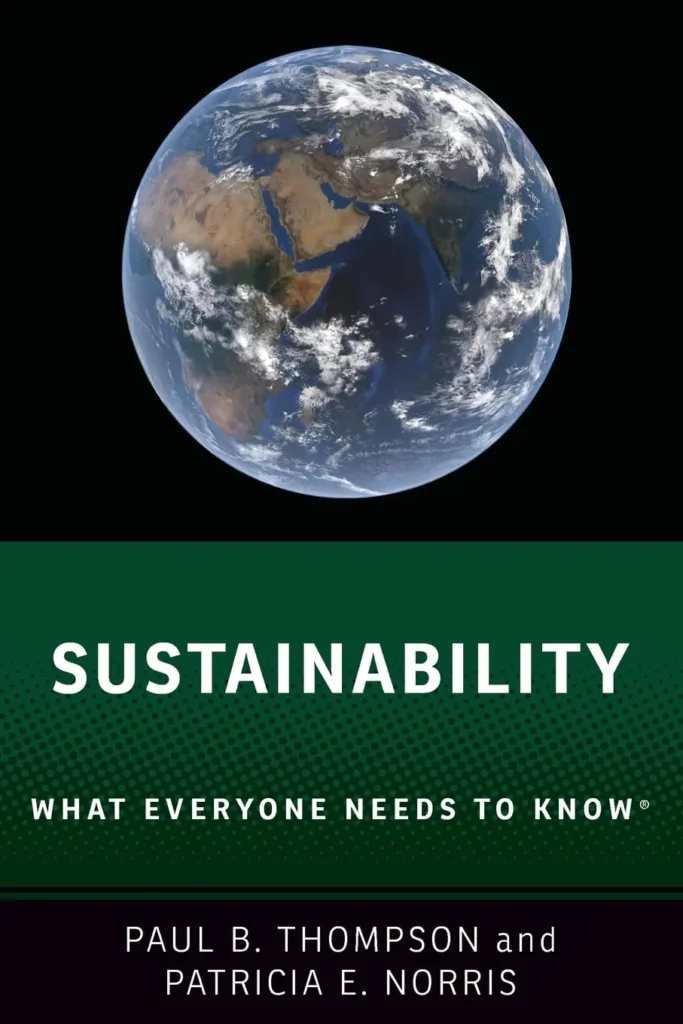
This accessible book explores what sustainability actually means, from environmental issues and climate change to business, government and the wider social impact of sustainable development. Sustainability is a good choice if you want to move beyond simple “eco-friendly tips” and understand the bigger picture.
🎧 Bonus Tip: It’s worth checking the latest Audible introductory offers — they’re often available as a free trial or for less than £1!
Whether you’re studying, building new skills, or working on personal growth, audiobooks and podcasts make learning more accessible and engaging.
👉 Check the current Audible offers here.
🎧 Audible – The Ultimate Study Hack!
- 📚 Listen to Textbooks & Study Guides anytime, anywhere.
- 🧠 Boost Focus with expert knowledge and productivity podcasts.
- 🎧 Relax & Unwind with bestselling audiobooks after classes.
- 🔥 Explore New Audiobooks Every Month with your membership!
🧠 Don’t Let Sustainability Become Another Source of Stress
There’s an important point worth making.
You cannot personally solve climate change by remembering to turn off your bedroom light.
Nor should sustainability become another reason to feel guilty about being a student.
You will make imperfect choices.
You’ll buy takeaway food.
You’ll forget your reusable bottle.
You’ll occasionally take a taxi.
You’ll buy something you don’t really need.
That’s life.
Sustainable living is about direction, not perfection.
If everyone waits until they can live a completely zero-waste, carbon-neutral lifestyle before taking action, very little changes.
Instead, focus on the things you can realistically control.
🌍 Simple Student Checklist To Live Sustainably at University
If the entire article feels like a lot, start here.
This week, try to:
- 🚶 Walk or cycle one journey you would normally make by car or taxi.
- 🥦 Plan a few meals before doing your food shop.
- ♻️ Learn your accommodation’s recycling system.
- 💡 Switch off lights and unnecessary appliances.
- 🛍️ Wait 24 hours before making a non-essential purchase.
- 📚 Check for a library or second-hand textbook before buying new.
- 👕 Wear what you already own before buying more clothes.
- 🍝 Cook one meal with your housemates.
- 🌱 Find out whether your university has a sustainability society or project.
You don’t need to do all nine.
Pick two and start there.
🌱 Final Thoughts: You Don’t Have to Be a Perfect Eco-Student
Learning how to live sustainably at university isn’t about becoming the student who lectures everyone else about recycling.
It’s about becoming more conscious of the decisions you make every day.
Your accommodation, food, transport, shopping and technology all offer opportunities to make slightly better choices. Some will be easy; others won’t.
And that’s fine.
Start small.
Walk when you can. Waste less food. Buy second-hand when it makes sense. Turn things off when you’re finished with them. Share instead of buying duplicates. Get involved with your university’s sustainability initiatives if you have the opportunity.
Over three or four years, those small habits can become second nature — and you may leave university with something more valuable than a degree: a better understanding of how your everyday choices affect your money, your community and the world around you. 🌍
❓ FAQ: How To live Sustainably at University
Start with practical habits such as reducing food waste, using sustainable transport where possible, saving energy, buying fewer new products and recycling correctly.
Not necessarily. Buying less, using second-hand items, cooking at home and reducing energy use can actually help lower your student living costs.
Walking, cycling or using public transport where practical, reducing waste, using energy efficiently and buying fewer new products are useful starting points.
Reduce unnecessary heating and electricity use, avoid wasting food and water, recycle correctly and share useful items with housemates instead of everyone buying their own.
It can be a good way to extend the useful life of products and reduce demand for new items, particularly for clothing, furniture, textbooks and household goods.
Plan your shopping, use ingredients before buying more, store food properly and make use of leftovers. Sharing meals with housemates can also make food go further.
Yes. Sustainability projects can give you opportunities to demonstrate transferable skills such as teamwork, communication, organisation, leadership and problem-solving.
🔗 Useful UK Resources
- GOV.UK – Understanding student living costs — useful for understanding the relationship between sustainability, utilities, food and other student expenses.
- Discover Uni – Cost of living — practical information on student living costs, including food, energy and travel.
- Students Organising for Sustainability UK – Green Impact — information about student and university sustainability initiatives.
- West London Waste – Waste Less and Eat Well at Uni — practical advice on reducing food waste and eating sustainably as a student.
🎓 University Essentials – Everything You Need for Uni
Did you know? We’ve put together tailored student essential lists to help you through every aspect of university life!
- 📝 Student essentials: Everything you’ll need to stay prepared, productive, and comfortable during a typical Uni day.
- 💡 Accommodation essentials: Make your space feel like home (and don’t forget the stuff everyone forgets!).
- 🖥️ Study from home essentials: Tools and tips to create a distraction-free, efficient study setup.
- 🥘 Kitchen essentials: From budget-friendly basics to smart cooking tools that make life easier.
- 🎧 Coolest gadgets for university: Level up your uni experience with tech and tools students actually use.